
Showing posts with label Amanda Scuglia. Show all posts
Showing posts with label Amanda Scuglia. Show all posts


Our Giverny Hamlet
August 13-26, eight Academy students lived and worked at the Terra Foundation for American Art-Europe in Giverny, France as part of a two-week Artist in Residence Program. Daniel Bilodeau (MFA 2013), Adam Carnes (MFA 2013), Ivy Hickam
(MFA
2013), Jacob Hicks (MFA 2012), Gaetanne Lavoie (MFA 2013), Robert Plater
(MFA 2013), Amanda Scuglia (MFA 2013) and Valentina Stanislavskaia (MFA
2013) will continue to share their experiences here.

Tuesday, August 14:
Today I rode up a hill with a borrowed mountain bike to the edge of a farm field. I could see little houses and valleys below. On my way I met two horses, one black, one white. Irritated by flies in their eyes they kept nodding their heads at me. I patted their warm brows. A young French girl, who must have stepped out of a painting, walked over to me calling out the horses' names. She was rosy cheeked and wore a dress the color of the sky. I spoke to her in my broken French and she patiently waited to understand. When I said "Je suis Américain," she smiled. She lives in a house down the way. I wished I could paint her. I said "À tout à l'heure" and hopped back on my bike.
An attempt at a landscape was made farther on up the hill. A sweaty brow and spilt water decided when it was done. I had fussed with it too much and the lights were muddied. But with renewed excitement for watercolor and landscape, I decided I would try again the next day for I'm out of practice in plein air and I knew that's how the day's painting would go.


After first week's crit, leaving Le Hameau
The studio area the Terra Foundation gave us for the two weeks is called
"Le Hameau." The studios are said to have a lot of soul. They are rich
in history; Lilla Cabot Perry, Frederick Carl Frieseke, Mary Wheeler,
and Richard Miller all painted here.

"Lady in a garden," Frederick Carl Frieseke

The
interior of my studio is always cool inside because of its thick walls.
It has an old fireplace and touches of paint from previous residents.
I've contributed gesso marks to the floor and a large branch from a
berry bush cut and left by the gardener. The gardens hiding to the
right of the building are a little wild; not too perfectly kept and
lovingly overgrown.


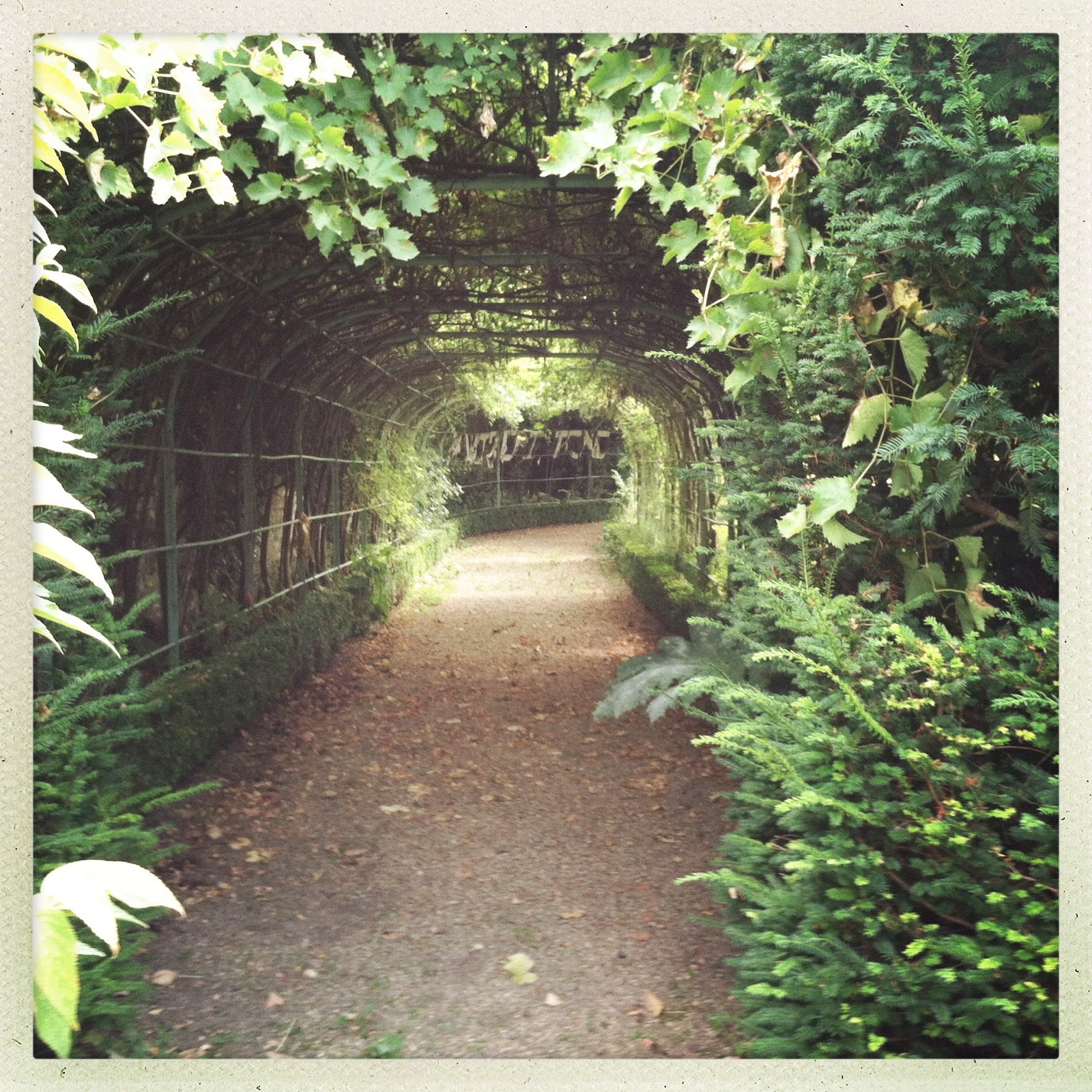

Blog post originally posted in Ivy's Blog (post: "Giverny" and "The Hamlet")
The Wonder of Giverny
Last semester I was selected to participate in an artist residency at the Terra Foundation for American Art Europe in France! The New York Academy nominated eight students and one professor to travel to Giverny for this incredible opportunity. Jean-Pierre Roy, Jacobs Hicks, Ivy Hickam, Robert Plater, Daniel Bilodeau, Valentina Stanislavskaia, Gaetanne Lavoie, Adam Carnes and I arrived in Paris a week early to do some research. We visited the Louvre, the Centre Pompidou, the Musee D'Orsay and a few contemporary art galleries. We also fit in some tourist stuff- like picnics at the Eiffel Tower, shopping at the Sennelier store, waiting in line and eventually getting to see the catacombs, partying at the Sacre Coeur, flea marketing, etc. After all that inspiration, we knew it was time to get to work.

When we all arrived in Giverny, we were greeted by our guide Miranda. She was extremely knowledgable with an absolutely delightful personality. Immediately the group was very taken with the place. We all arrived feeling very, very grateful.
The town, with less than 500 residents, was full of charm and covered in flowers. We had extremely comfortable living situations as well as generously sized studios (equipped with an apple orchard!). A chef prepared our dinner and dessert and delivered it daily. We all met for lunch everyday, which was provided by the Impressionist Museum cafe. When we weren't in the studio working, we were taking day trips to new landscapes, exploring surrounding towns by bike, or plein-air painting.

One of the coolest experiences from Giverny was Monet's house and gardens. It was gorgeous, but crowds of tourists filled it everyday. As a courtesy, they closed it to the public one evening, and allowed us entry so that we could paint peacefully.

We formed friendships and bonds that otherwise might not have happened. We learned so much about each other's work as well as our own. And we got to see how this place had changed our work. It's a short period of time that none of us will forget. I cannot thank the Academy and the Terra Foundation enough for the opportunity.


Impression, Soleil Levant
August 13-26, eight Academy students lived and worked at the Terra Foundation for American Art-Europe in Giverny, France as part of a two-week Artist in Residence Program. Daniel Bilodeau (MFA 2013), Adam Carnes (MFA 2013), Ivy Hickam
(MFA
2013), Jacob Hicks (MFA 2012), Gaetanne Lavoie (MFA 2013), Robert Plater
(MFA 2013), Amanda Scuglia (MFA 2013) and Valentina Stanislavskaia (MFA
2013) will continue to share their experiences here.

Over the course of two weeks I was lucky
enough to join a group of gifted artists led by Professor Jean-Pierre Roy, Daniel Bilodeau (MFA
2013), Adam Carnes (MFA 2013), Ivy Hickam (MFA 2013), Jacob Hicks (MFA 2012),
Gaetanne Lavoie (MFA 2013), Robert Plater (MFA 2013), Amanda Scuglia (MFA 2013)
and Valentina Stanislavskaia (MFA 2013), on a
residency in Giverny, France, the residence of revolutionary seer, Claude
Monet.
Monet was wholly indebted to
phenomenological truth, more than he was indebted to pre-conceived standards of
art affixed to institutionalization. He was never to give himself over to
the ways in which he was taught to see-though he was clearly taught, from an
early age, the precedence of French academic art. History is opened when
placed in the hands of someone willing first to learn, and then to seek change.
Initially to him, I assume, it
must have seemed ludicrous to speak the visual language of established artistic
tradition and call it mimetic truth-- as it seems ludicrous for any member of
contemporary life to refer to a Cimabue painting as the realistic mirror of the
human eye to the exterior world.
Traditions are born. They
swell, grow roots, share excitements, age, and then must be upended, just as
the dilapidated building, whose structure was once perfect, must be demolished
and rebuilt. To upend institutional thought is to teach us our thoughts
want and will always focus on progression. We are taught ideas as if they
are unchangeable, but to triumph is to change.
So Monet goes outside, to a
garden, and decides to paint the arc of time by way of color and
movement. He dabs in the changing light against a white linen the optical
equivalencies of water, weeping willow, chapel, haystack, human--knowing those
containing lines of structure are the lies of his mind wanting to create
demarcations and separations. What he comprehends is the melt of
visual unity.
He calls a work Impressionist
Sunrise, and his critics poke fun and name his friends and followers
“Impressionists.” The sonorous bell of the word rings, and the way
western society sees again moves. A new cathedral of thought slowly
builds awaiting its fall.
It is necessary to love the modes of thought
that shape us, that come before, and to thank them. It is our duty to
shape new modes of thought.
A Place of Beauty
On August 13, eight Academy students arrived at the Terra Foundation for American Art-Europe in Giverny, France to begin a two-week Artist in Residence Program. Daniel Bilodeau (MFA 2013), Adam Carnes (MFA 2013), Ivy Hickam (MFA
2013), Jacob Hicks (MFA 2012), Gaetanne Lavoie (MFA 2013), Robert Plater (MFA 2013), Amanda Scuglia (MFA 2013) and Valentina Stanislavskaia (MFA 2013) will share their experiences here
throughout their residency.

Giverny is a place of beauty. Replete with trees and
flowers, filled with fresh air, the lifestyle in this small French village is
at once both simple and sophisticated.
On the day of our arrival we were met at the train station
in the neighboring town of Vernon by Miranda, our hostess and facilitator.
Taking us into Giverny, she introduced us to the area and took us on a tour of
the grounds. We chose rooms to live in, studios to work in, and bicycles with
which to explore. Miranda has been truly kind and helpful to us. As a group we
walked, visited Monet's outdoor grave, and ate our first residency meals.
 |
| Monet's gravesite |
When I woke up yesterday I just lay there for a while listening
to the birds sing. Eventually, there came the charming and unexpected bbbaaaaaa
sound of a sheep bleating. It is kept nearby with emu and ostriches. We began
the day with a trip to the Impressionist Museum right here in town. We had a
nice guide who had a strong accent and a good command of English, but had
probably never addressed a group of people for a long time in the language
before. Her voice would begin to shake with nervousness, and we would seek to
ease her with approving looks of interest and comprehension. The collection was
great and unexpected. Afterwards, we moved our bicycles then went into Vernon
by van to satisfy outstanding needs for supplies and personal snacks and wine.
We had a lot of fun with french words, the radio, and potato chips in unfamiliar
flavors such as roast chicken with thyme, cheeseburger and kebab.
Today we went to Monet's house and garden first thing. Monet's
extensive collection of Japanese woodblock prints was superb, and the garden
beautiful. Best for sure is the large lily pond surrounded by so many beautiful
trees and flowers; featuring two little bridges. I remained in this area for a
long time, as it grew more enchanting as I stayed longer. I made two little
drawings. As tourists passed me, they commented in a variety of the world's
languages and about fifteen different parties took my picture, which was funny.
We are well taken care of here. The food has been excellent. In
the morning there are various breads and cheeses and jams and fruit and of
course, Nutella. For lunch we all meet at 12:30 in the museum cafeteria where
we have a variety of fresh options including a new plat du jour and desert du
jour each day. Chicken, pork, fish,french sauces, big salads. It is delicious
fare, and comes with beer or wine or orangina, etc. and a desert from a long
list of temptations including chocolate lava cake and numerous flavors of
amazing ice cream. Add to it espresso or cafe creme, and it is a satisfying but
lengthy operation; taking nearly two hours each day. The dinner is equally
good, delivered by a chef to our fridge and only requiring that we set the
table and heat it up in the oven.

Everything in this picturesque village is very attractive, well
attended by tourists, and well kept. I'm looking forward to biking around and
exploring the natural outskirts some more. My studio space has an old European
personality and opens into a beautifully manicured group of apple trees. I
share it with Jacob, and we will be spending a lot of time in there.
There is a great sense of
appreciation amongst the group, and we all look forward to the nourishment,
creation, and building of fond memories promised by an experience such as this.
My First Tribeca Ball, 2012
By Amanda Scuglia, MFA 2013
Photography by Maria Teicher, MFA 2013

In the weeks leading up to the ball, there was a lot of buzz going around the Academy. Party planners came in to discuss the look of the evening and the entertainment. The students cleaned up their studios and displayed their best work. The walls throughout the building were curated by the faculty.


The evening of the ball, students arrived dressed in cocktail attire. This was different from how we are used to seeing each other, with old clothes covered in paint. Franklin Street was blocked off and security was high. Masked models were dressed in bodysuits and exquisite Van Cleef and Arpels jewelry. Celebs and art collectors were met in the lobby by red carpet photographers. We mingled in and around our studios once the guests arrived.


Live music was performed on all 6 floors. All bars were fully stocked with top-shelf liquor and personal-size champagne bottles. Entertainment was occurring in each designated room. No matter which door you chose, something fun was happening. You could witness a performance piece or get your photograph with a Frida Kahlo or Rene Magritte painting. (photography at these artists booths, including the shot below of Jessica Augier and I, courtesy of www.bringintobeing.com)

Celebrities like Naomi Watts and Liev Schreiber, Julianna Margulies, Solange Knowles, Kim Cattrall, Nora Zehetner and Carla Gugino walked through our studios. Artists like Will Cotton and Jeff Koons were also spotted. I was lucky enough to be greeted by some curious art supporters with questions about the content of my paintings. I got to explain to interested viewers the process of my work. I received some great feedback and I even sold a piece! It was such an exciting night for all of us.


After the cocktail hour we were rushed out of the building and onto the after-party at bar M-15 on Walker Street. The class of 2012 and 2013 had many drinks and many dances. Meanwhile, back at the Academy, Robert DeNiro was being honored at the Tribeca Ball dinner for his years of continued support of the arts. He was met by friends like Harvey Keitel and Mary-Kate Olsen, among others. See some selected photos, featuring some artist studio shots, from the night below. See full set of photos by Maria Teicher at on our flickr page here.

Adam LaMothe, MFA 2012

Nic Bandy, MFA 2013

Holly Sailors, MFA 2012

Kristy Gordon, MFA 2013

by Kaitlynn Stubbs, MFA 2012


Nicolas Sanchez, MFA 2013

Ramona Bradley, MFA 2012

Rob Plater, MFA 2013


Sherry Di Filippo, MFA 2012

Elana Baziz, MFA 2012


Faculty Spotlight: An Interview with Ted Schmidt
by Amanda Scuglia, MFA 2013

I was born in Ann Arbor, Michigan, and lived there until I was 16. I spent some of my high school years at school in Switzerland. I came to New York in 1964.
Tell me a little about your own personal work..
I had several wonderful teachers who had significant influence on the evolution of my work. Though I had early training in abstraction from Gabriel Laderman (student of de Kooning and Han Hofmann) and Stanley Hayter (Surrealist and teacher of Pollock), I have been strongly figurative for the past 45 years). The several schools I attended in Europe: International School in Geneva, Ecole des Beaux-Arts in Paris, Atelier 17 in Paris, and The American Academy in Rome, allowed me to travel widely and to deeply absorb the classical tradition. My focus has always been the human figure. I prefer to work directly from life, sometimes from photos (as an aide-mémoire), and very often from memory and invention.

You are one of the founders of the New York Academy of Art; Tell me how that came about:
I was the Academy’s first and only teacher when the school began in 1982. That year I was awarded the Prix de Rome, and after teaching for a semester, I left for the American Academy in Rome. I returned in 1984, and rejoined the New York Academy. We expanded the curriculum to include sculpture, anatomy and life-size painting. The reason I was included among those planning the birth of the Academy, was because in 1981, I had a solo museum show and the museum’s director was an important figure in the planning group. He brought me in.

Andy Warhol was another one of the founders, did you know him?
Andy Warhol was really devoted to the Academy in its early days. Surprisingly, his personal taste - the art he collected and chose to live with - was classical in nature. He actually drew well and considered training in drawing essential for an art student. After his unfortunate early death, his foundation directed its funds entirely to the Academy. For the next two years our students attended the Academy free, under Warhol Scholarships! This ended when Warhol Foundation politics caused a change in priorities. Anyway, Andy was close to our school in the beginning. I did spend an afternoon at the “Factory” and watched him at work. We went together to an opening, and later he visited me in my studio. I remember he said my work was ‘beautiful.”

Since youve been here since the beginning, can you tell me how the Academy has changed over the years?
No doubt, the Academy right now has never been better. The early days were very tumultuous. However, our students have always been talented, and have often produced wonderful work. I think we are doing about as well as possible, with a wide range of devoted teachers and courses, and a philosophy that encourages a wide range of creativity.
No doubt, the Academy right now has never been better. The early days were very tumultuous. However, our students have always been talented, and have often produced wonderful work. I think we are doing about as well as possible, with a wide range of devoted teachers and courses, and a philosophy that encourages a wide range of creativity.
What do your think makes NYAA's MFA program different from others?
The NYAA is certainly unique as a graduate art school. Of course, we offer technique and skill-based courses focused on the human figure. Our community of amazing art students, who share so many interests, ideas and creative goals, very much contributes to this special place.
Have any favorite quotes?
My beloved teacher, Lennart Anderson, said to me “An artist has to keep his (or, her) life simple.”


Subscribe to:
Posts (Atom)